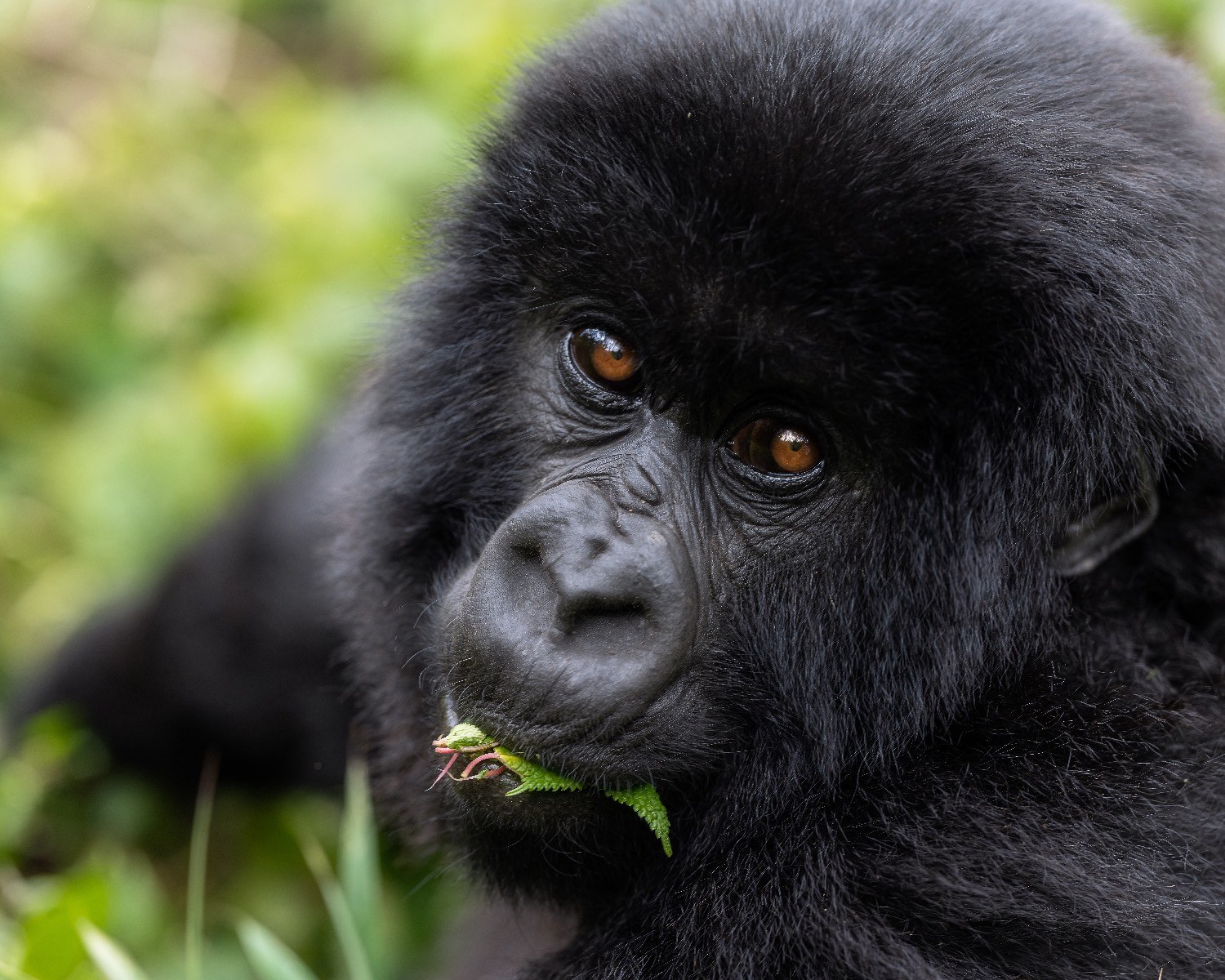
Eye to eye, in the mist.
The land of a thousand hills — and the great apes who live among them.
Plan my trip to RwandaSome encounters change the way you see the world. Sitting a few metres from a wild mountain gorilla — watching it watch you — is one of them.
Rwanda is small, green and astonishingly beautiful: endless terraced hills, misty volcanoes, tea plantations that run to the horizon, and one of the last great rainforests in East Africa. It is also one of the safest, cleanest and most welcoming countries on the continent.
This is a journey of three worlds. Kigali, a calm and surprisingly sophisticated capital. Nyungwe, an ancient forest alive with chimpanzees and birdsong. And the Virunga volcanoes, where the mountain gorillas live — the reason most travellers come, and the moment they never forget.
We design it as a private trip, unhurried and entirely yours. It also works beautifully for a small group of friends or family who want to share the experience.
The photos on this page come from our partners and clients in Rwanda — real places, real moments.
Kigali
The land of a thousand hills.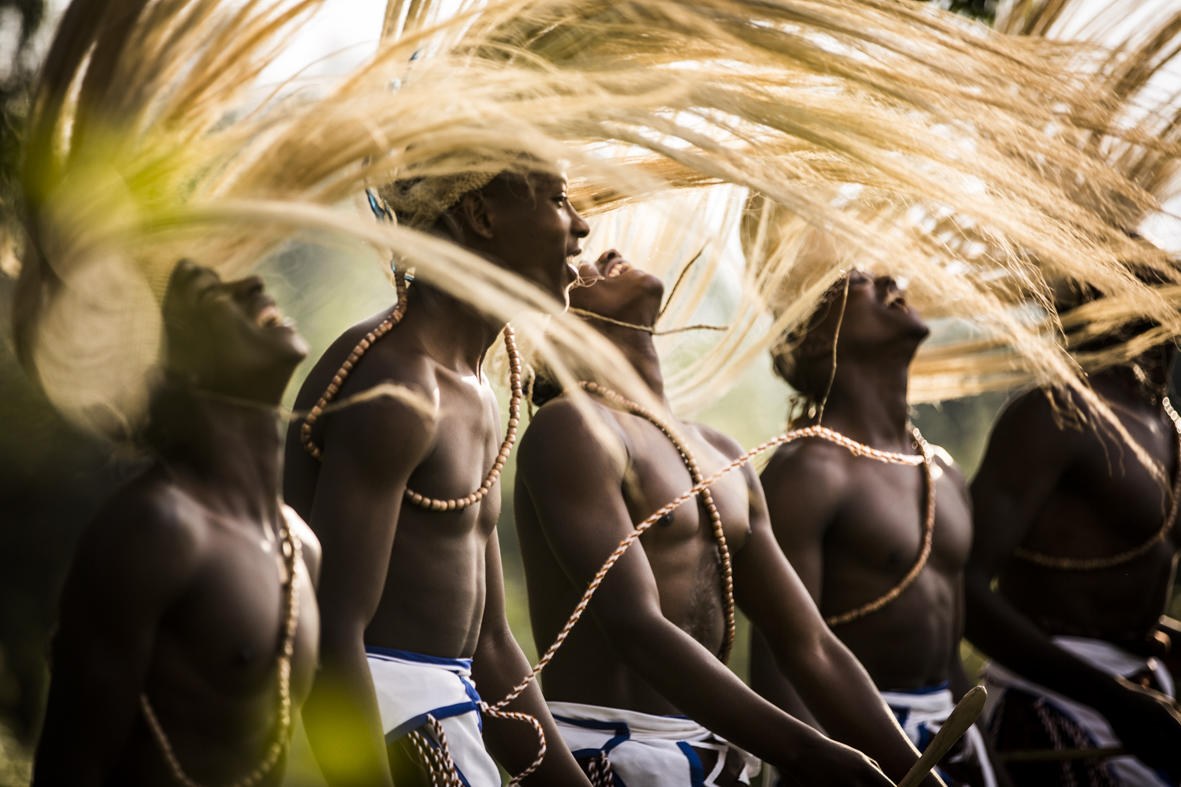
Most travellers expect Kigali to be a place you pass through. It isn't.
It's a capital built across hills, quiet and green, with good coffee, a thoughtful art scene and some of the warmest people you'll meet anywhere. Spend a day here and the country starts to make sense before you've even left the city.
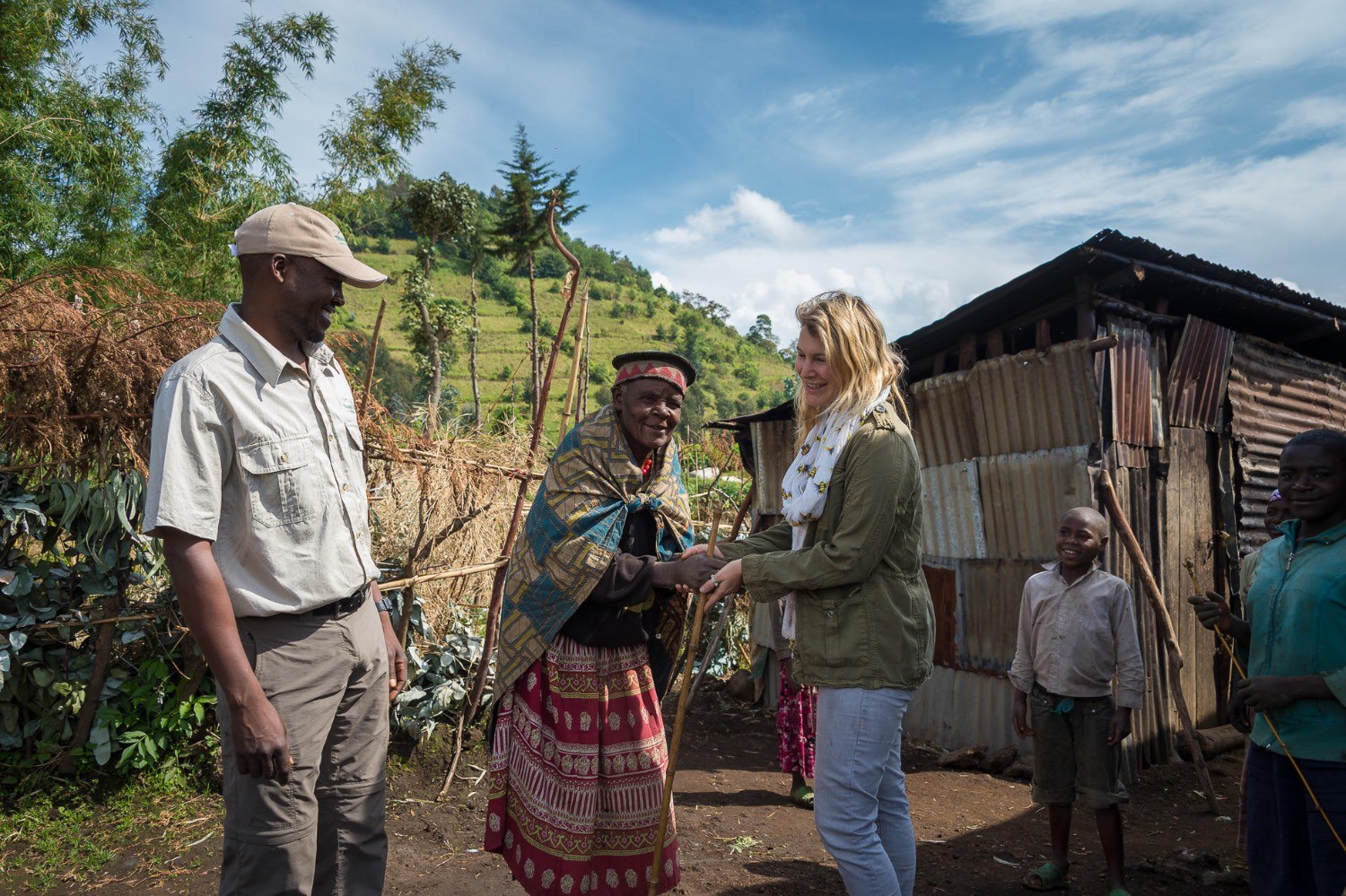
We like to begin slowly: contemporary galleries and creative spaces, a long lunch of Rwandan flavours, and — for those who want it — the National Genocide Memorial, which tells, honestly and without spectacle, the story of how far this country has come.
It's the right way to arrive. Not rushing to the forest, but letting Rwanda introduce itself first.
Arrive a day early
Give yourself a full day and a good night's sleep in Kigali before the drive north. You'll land rested, acclimatised and ready — and the gorilla trek is far more enjoyable when you're not starting it jet-lagged.
Seven days, all arranged
Our classic route runs seven days and six nights. The private version includes every permit — two gorilla treks, chimpanzee tracking and the canopy walk — lodges with full board, a private 4×4 with an English-speaking guide-driver, a VIP welcome at the airport and emergency medical cover. You travel; we carry the logistics.
Pack for all seasons in one day
Rwanda is green and mild all year, but rain is never far off. The drier months, roughly June to September, make for firmer trails; March–May and October–November are lush and quiet. Bring waterproofs, a warm layer, gloves and a hat for cool evenings, sturdy closed shoes for muddy trails and sun protection for the bright highland light. Once your dates are set, we send a full packing list. (Rwanda runs on GMT+2.)
Two local rules
Plastic bags have been banned in Rwanda since 2008: they are taken away at the border, even a duty-free one. And eating on the go or in the street is considered rude — meals belong at a table, in a café or at home.
A mélange lunch
Traditional buffet cafés where you pay one fixed price for a plate and pile it high: rice, sweet potato, beans, matoke and sauces. The tastiest budget lunch in town, for visitors and locals alike.
Stromae — “Papaoutai”
The Belgian star behind “Alors on danse” is half Rwandan. His father, a Rwandan Tutsi, was killed in the 1994 genocide, and “Papaoutai” — “Papa, where are you?” — is widely heard as a song about him.
Nyungwe Forest
Where the forest is still wild.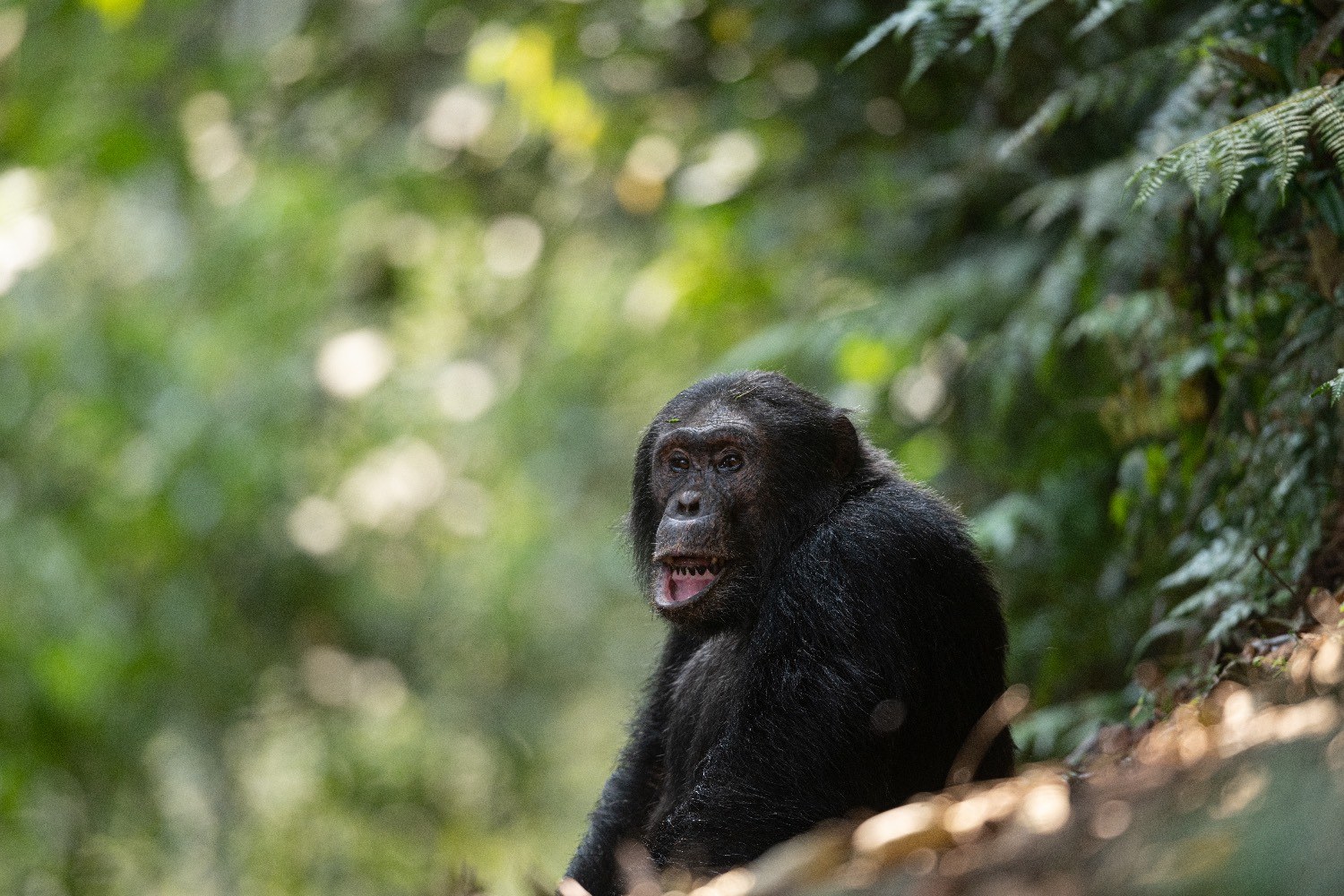
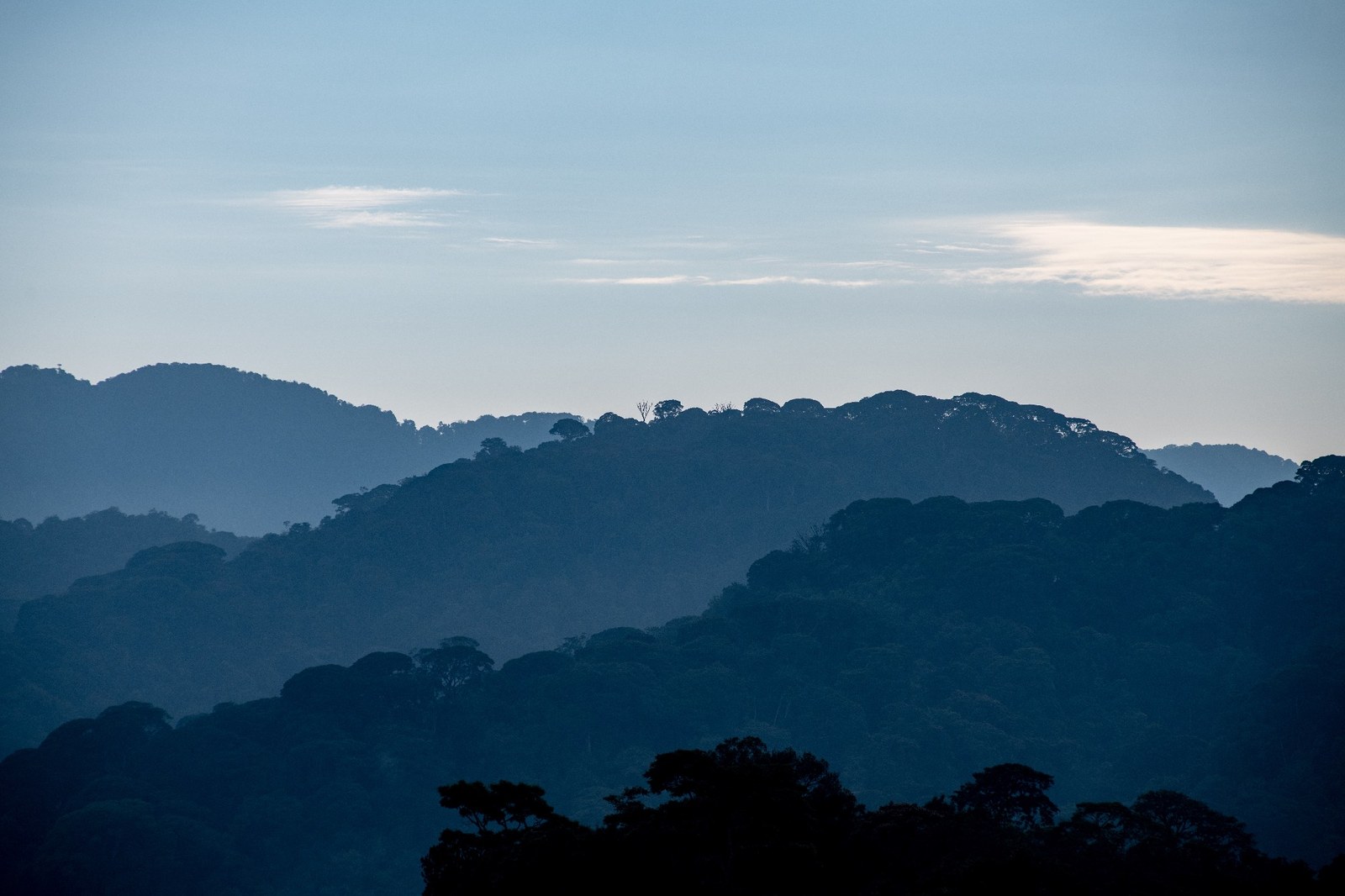
Nyungwe is one of the oldest rainforests in Africa — a vast, dripping, living thing that has been here since long before the last ice age.
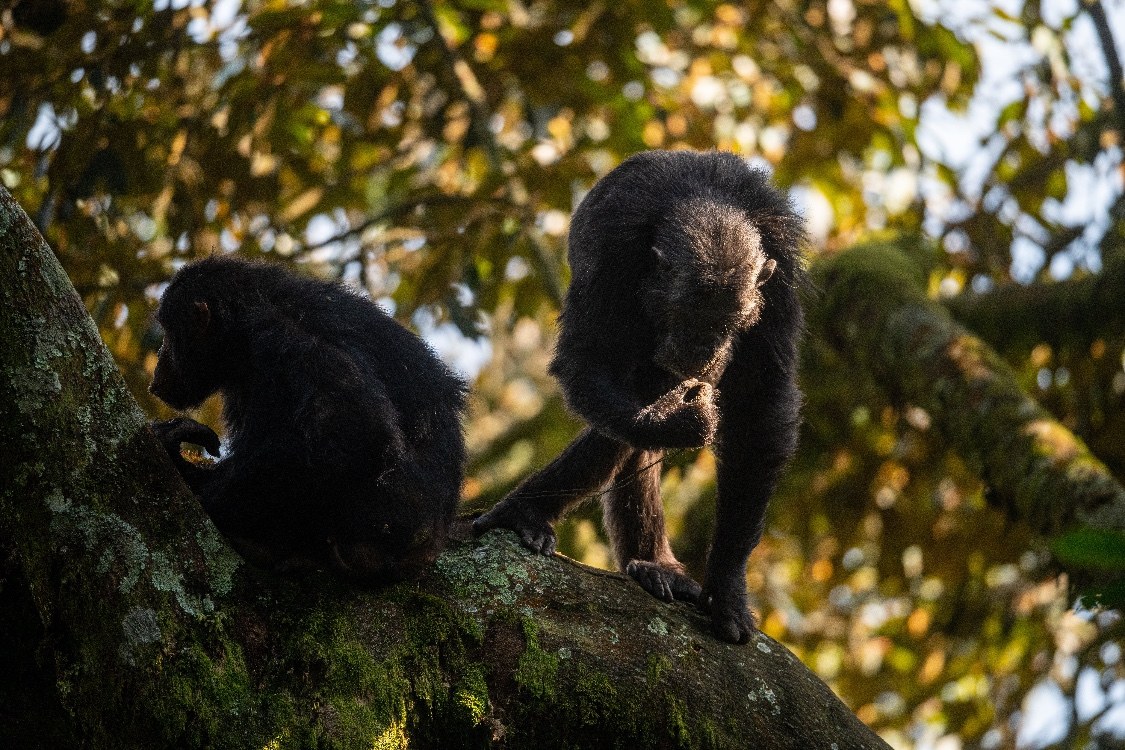
Following the chimpanzees
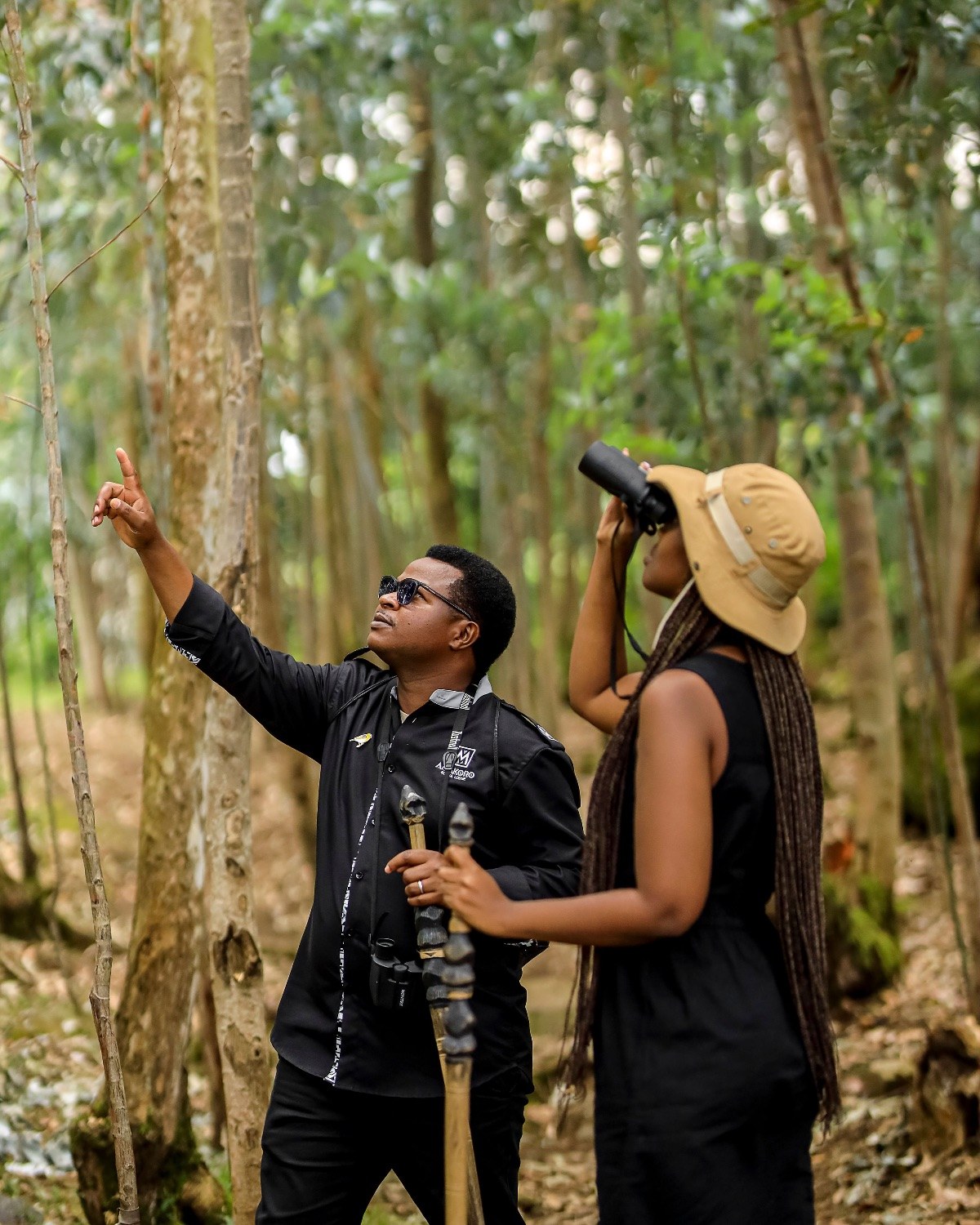
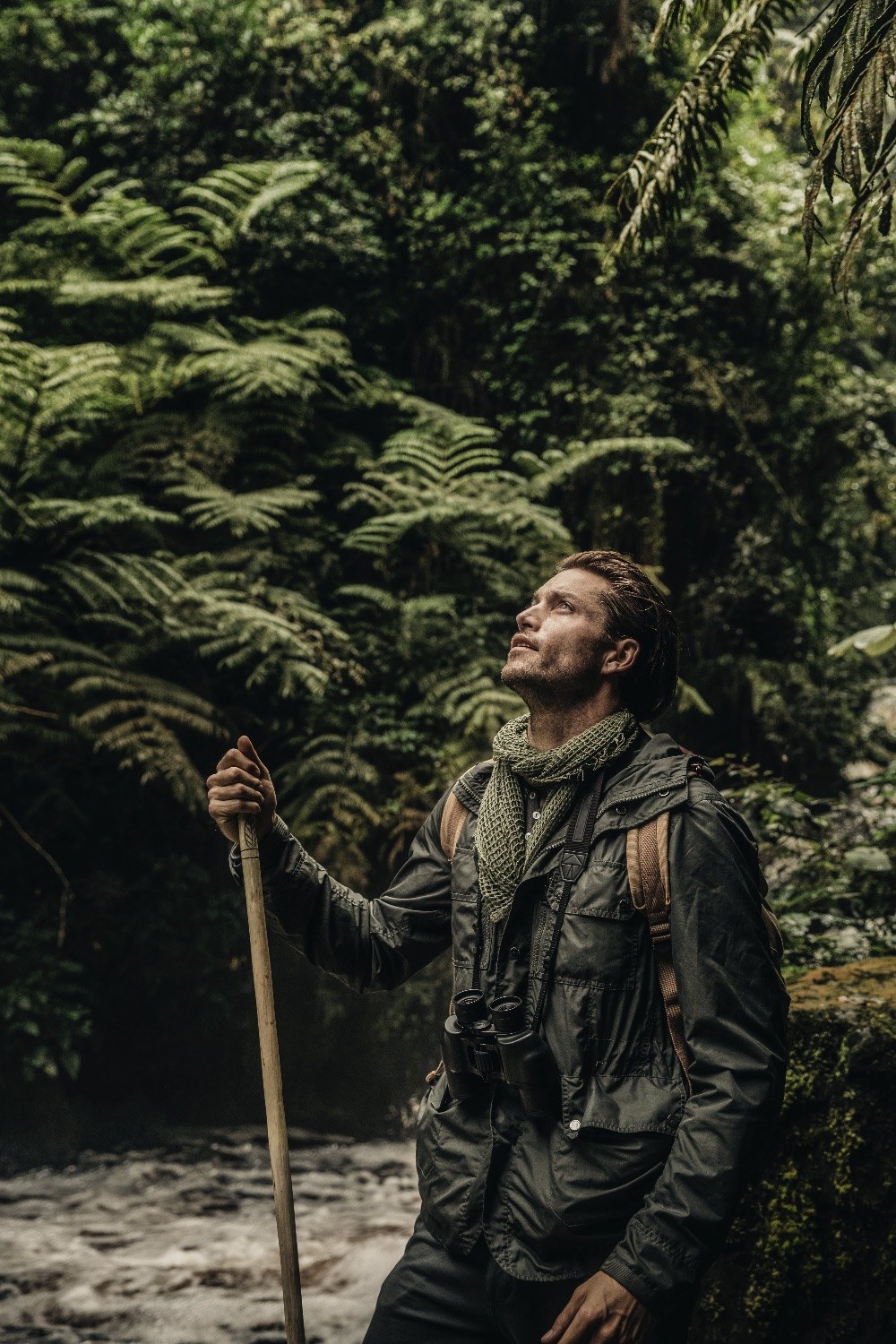
You come for the chimpanzees. You hear them first: a sudden eruption of calls somewhere in the canopy, and then the trackers are moving, and so are you, following the sound through the trees until you find them — feeding, playing, arguing, watching you right back.
Level with the treetops
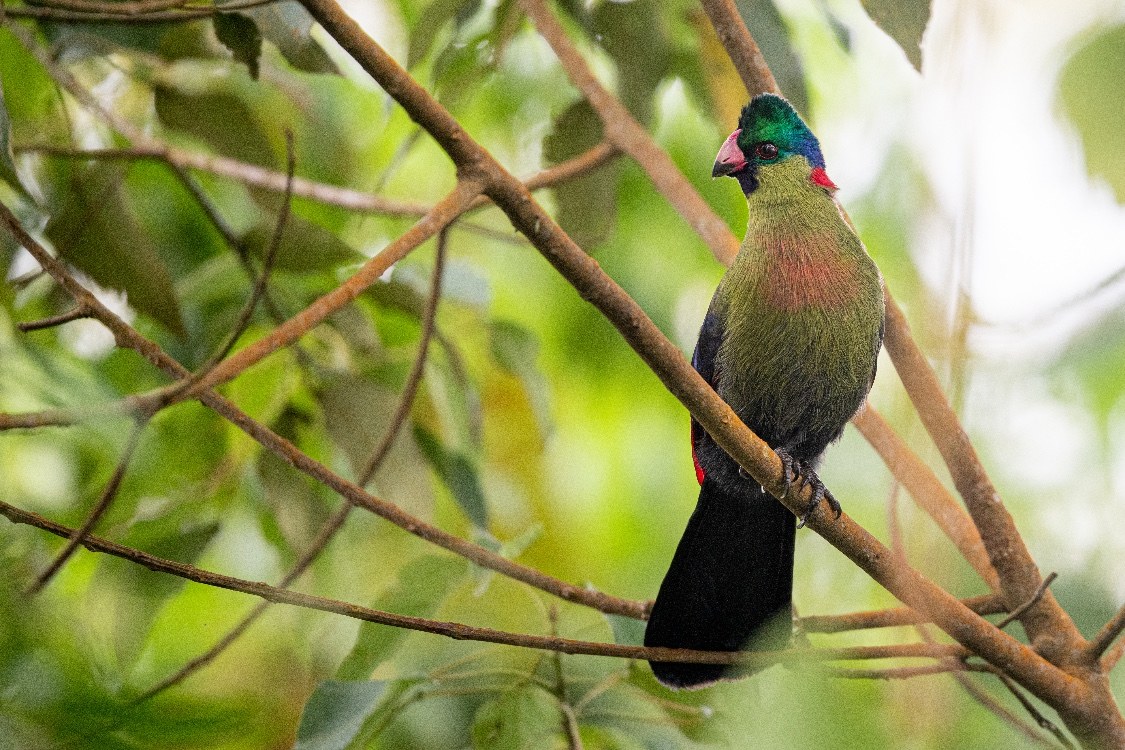
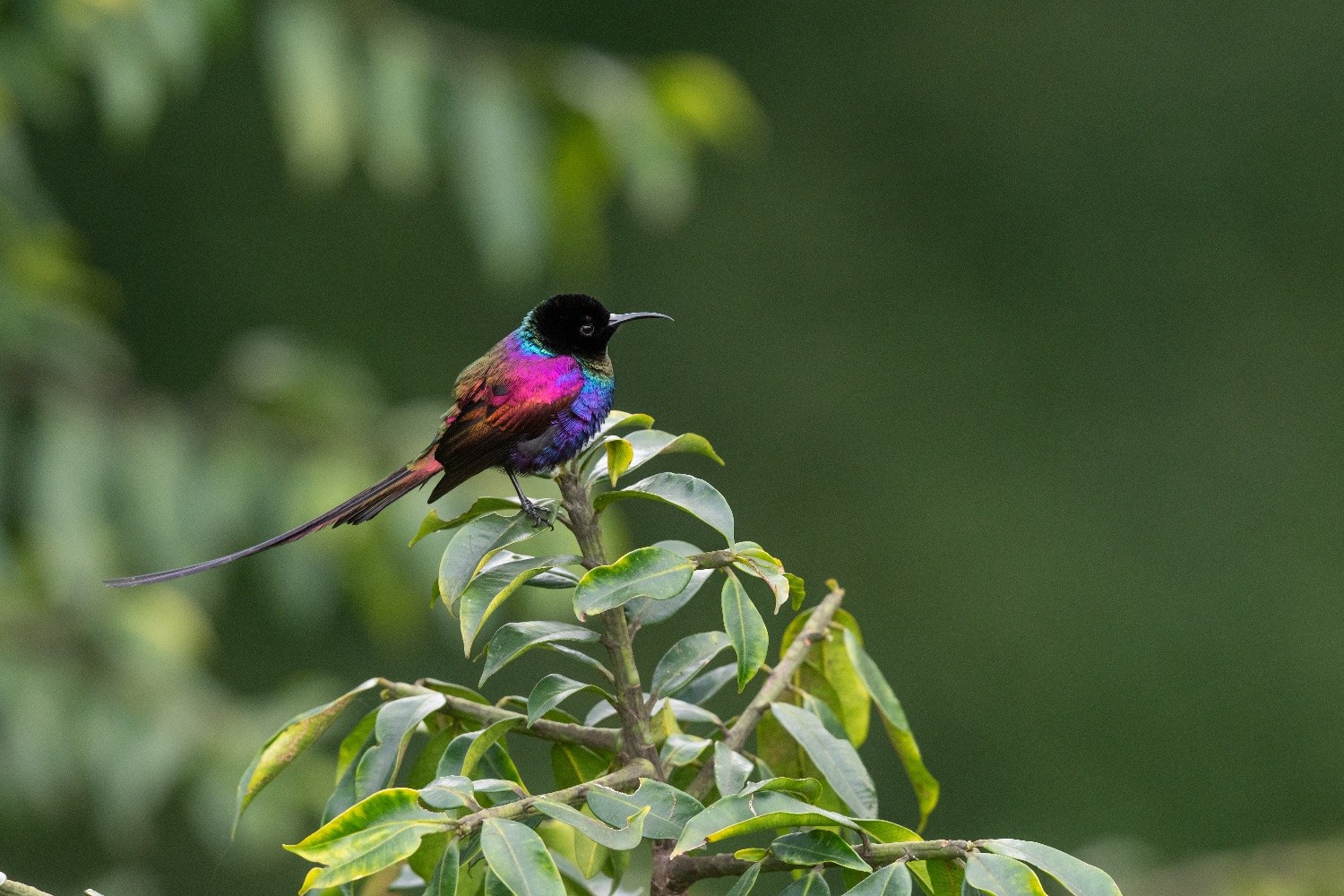
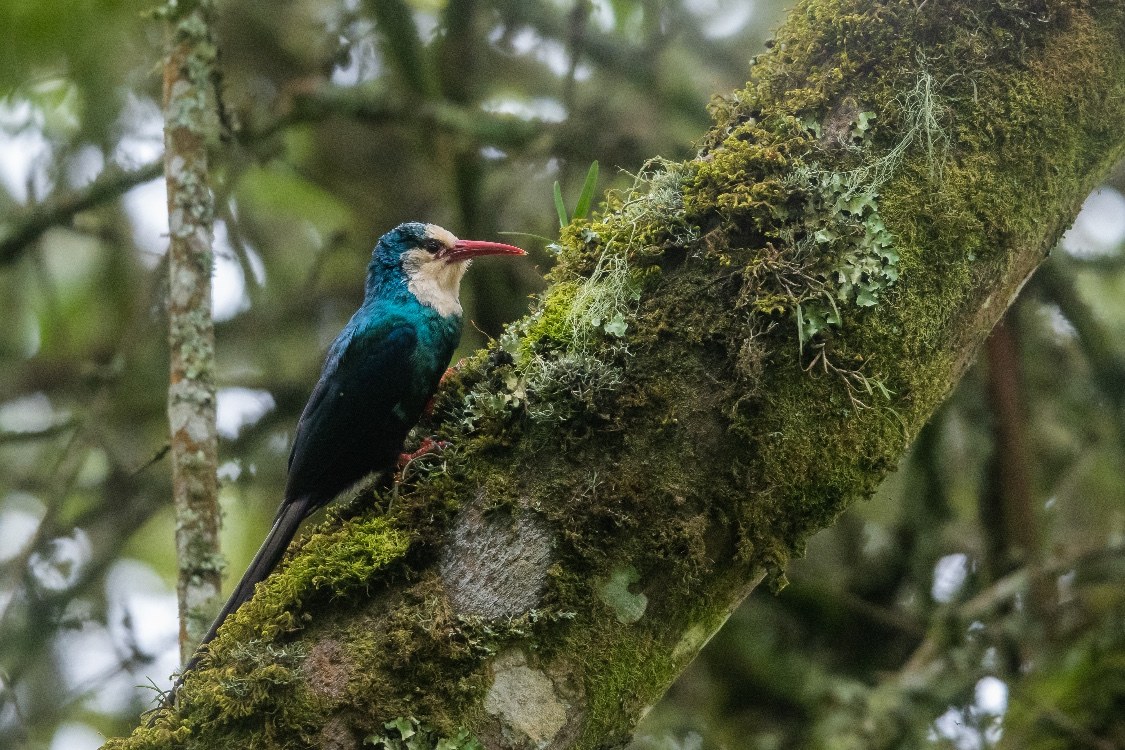
But the forest is more than its apes. Colobus monkeys leap overhead, hundreds of bird species call from the canopy, and a long suspended walkway lets you stand level with the treetops, looking out over an ocean of green.
The night shift
And it doesn't sleep. After dark, a guide leads you out with a spotlight to find the forest's night shift — the creatures that only emerge once the sun is gone — and on a clear night, you turn to the telescope and the dense equatorial sky.
Among the tea
You stay here among the tea. The plantations run right up to the forest's edge, and a morning with the pickers — learning to choose and hand-harvest the youngest leaves, then tasting how the brewing changes everything — is its own quiet pleasure. The drive in, through hills combed with tea, is one of the most beautiful in the country.
Start before dawn
Chimpanzee tracking begins early, while the troop is still close to where it nested. It can mean a steep, slippery hike — but good boots, a light rain layer and a reasonable level of fitness are all you need. The earlier you start, the better your chances.
Isombe
Cassava leaves, pounded and slow-cooked with peanut paste and spices. Unexpected, deeply savoury, and one of the country’s best-loved dishes.
Matoke
Green cooking bananas stewed with onion, spices and sometimes meat. The texture is close to soft, well-cooked potato.
Volcanoes National Park
The great expedition.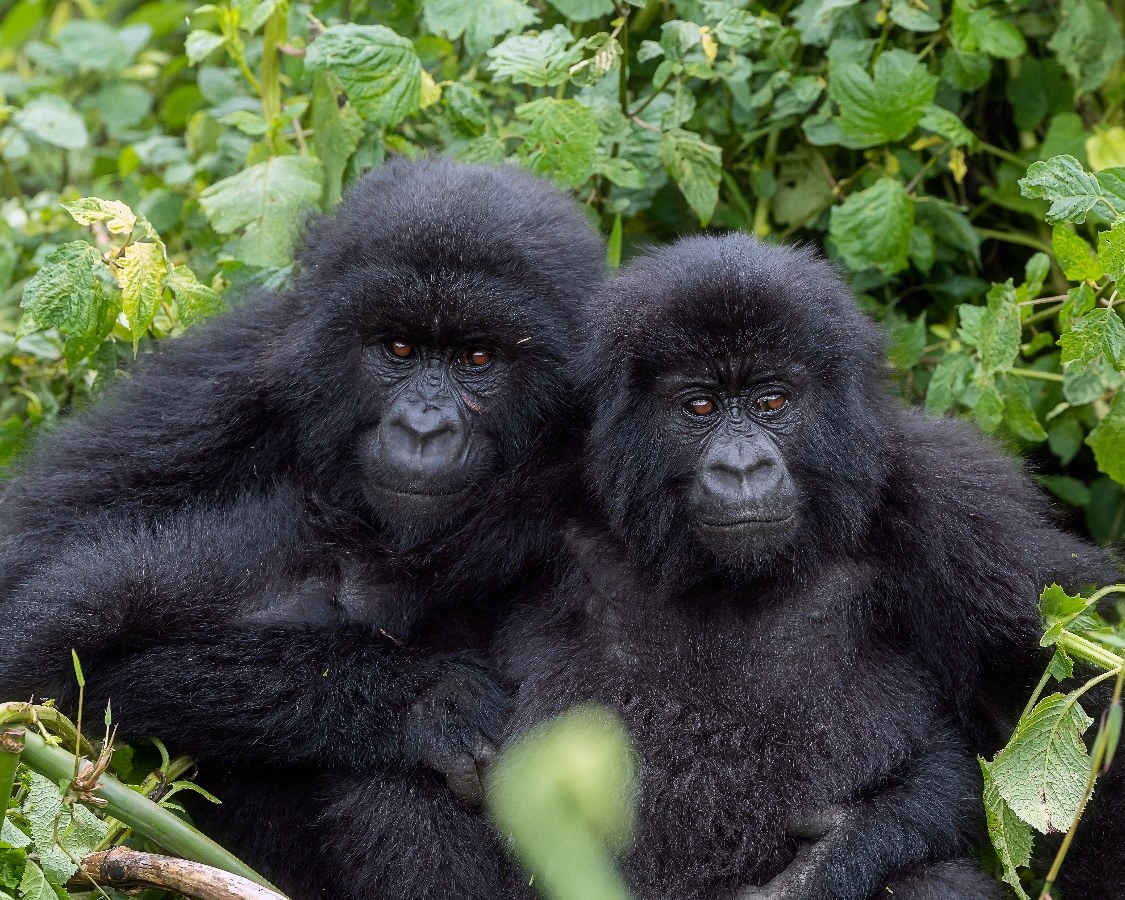
This is what you came for.
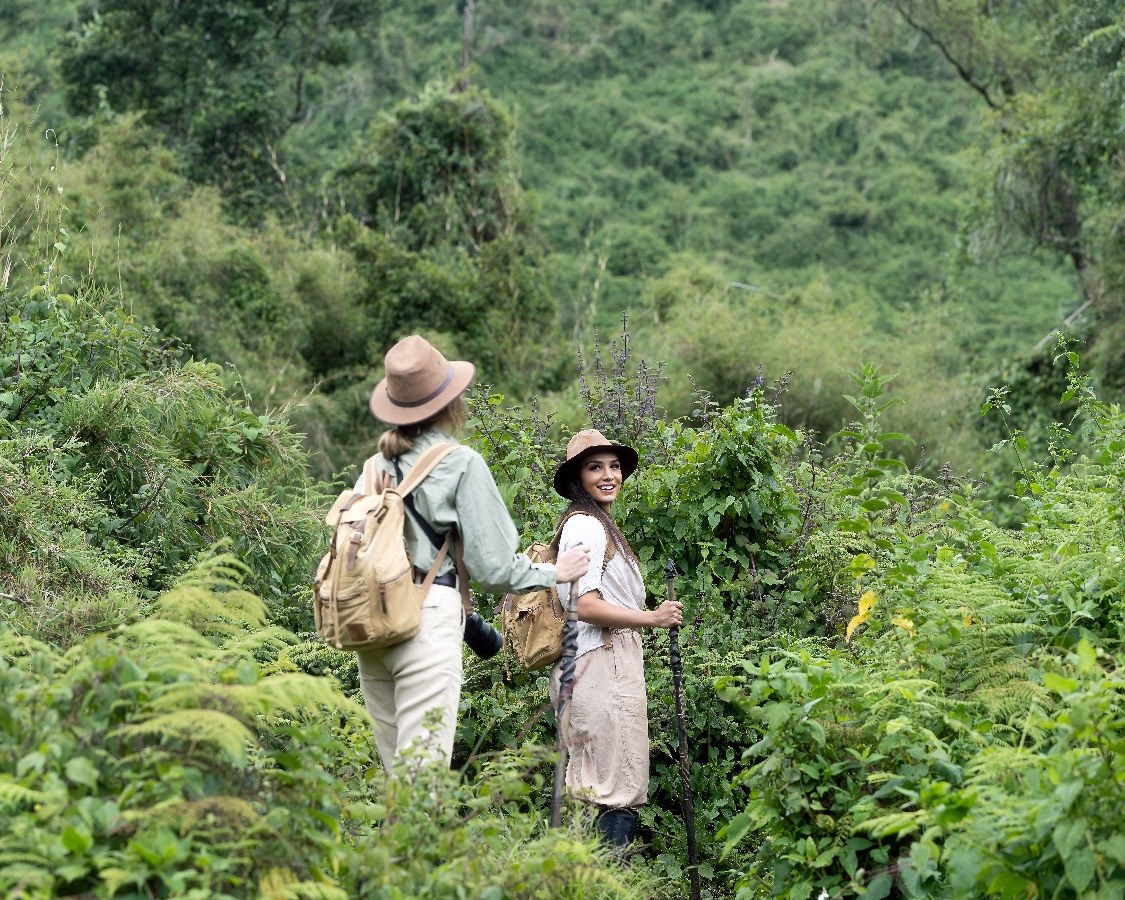
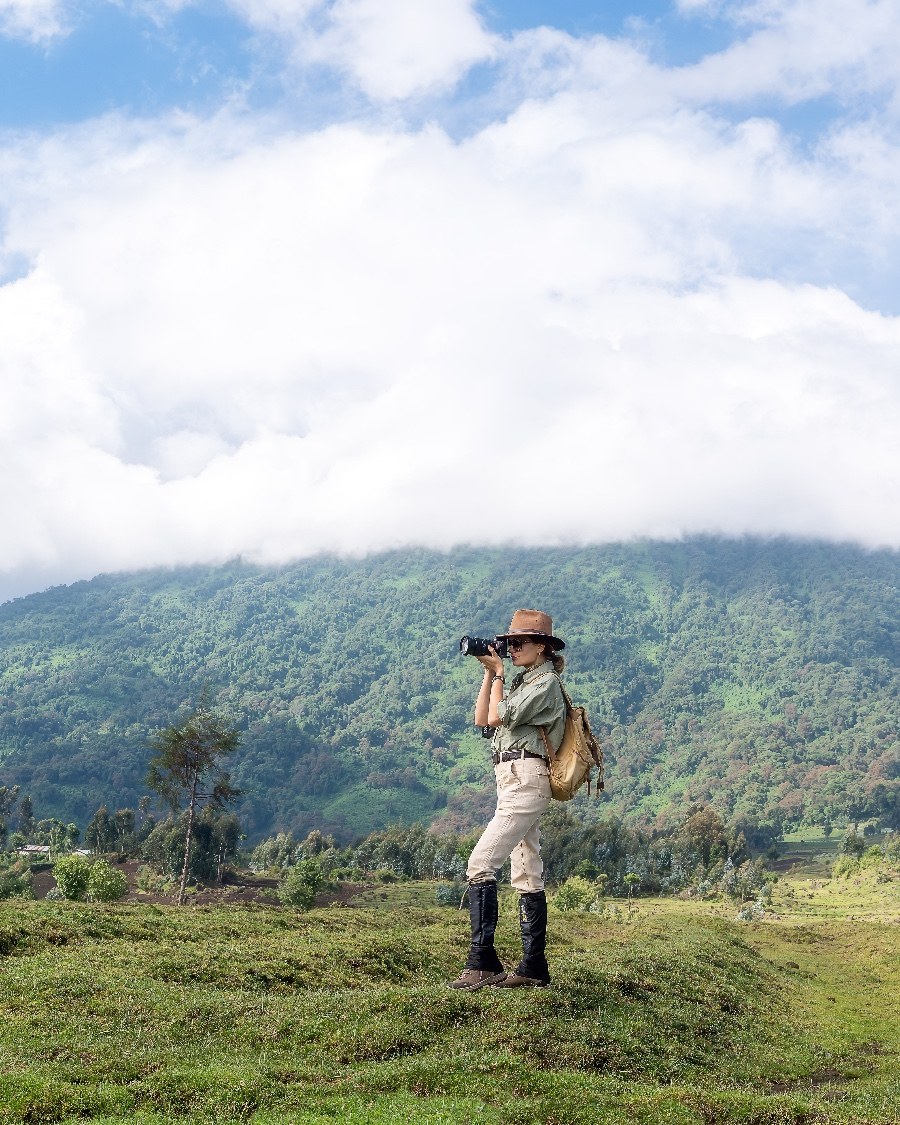
The morning begins with a briefing at the park headquarters, below the Virunga volcanoes. Then you set off — through farmland first, then bamboo and dense mountain forest — with a guide, trackers who already know where the family spent the night, and porters if you'd like a hand on the climb.
Choose your trek, and take a porter
On a private trek you can tell the guide the level you want — easy, medium or hard — and be matched to a gorilla family accordingly. Hire a porter: it's a modest sum that supports the local community, gives you a steadying hand on the muddy sections, and makes the whole day easier. Permits are limited and must be booked well ahead — which is exactly what we handle for you.
One hour with the family
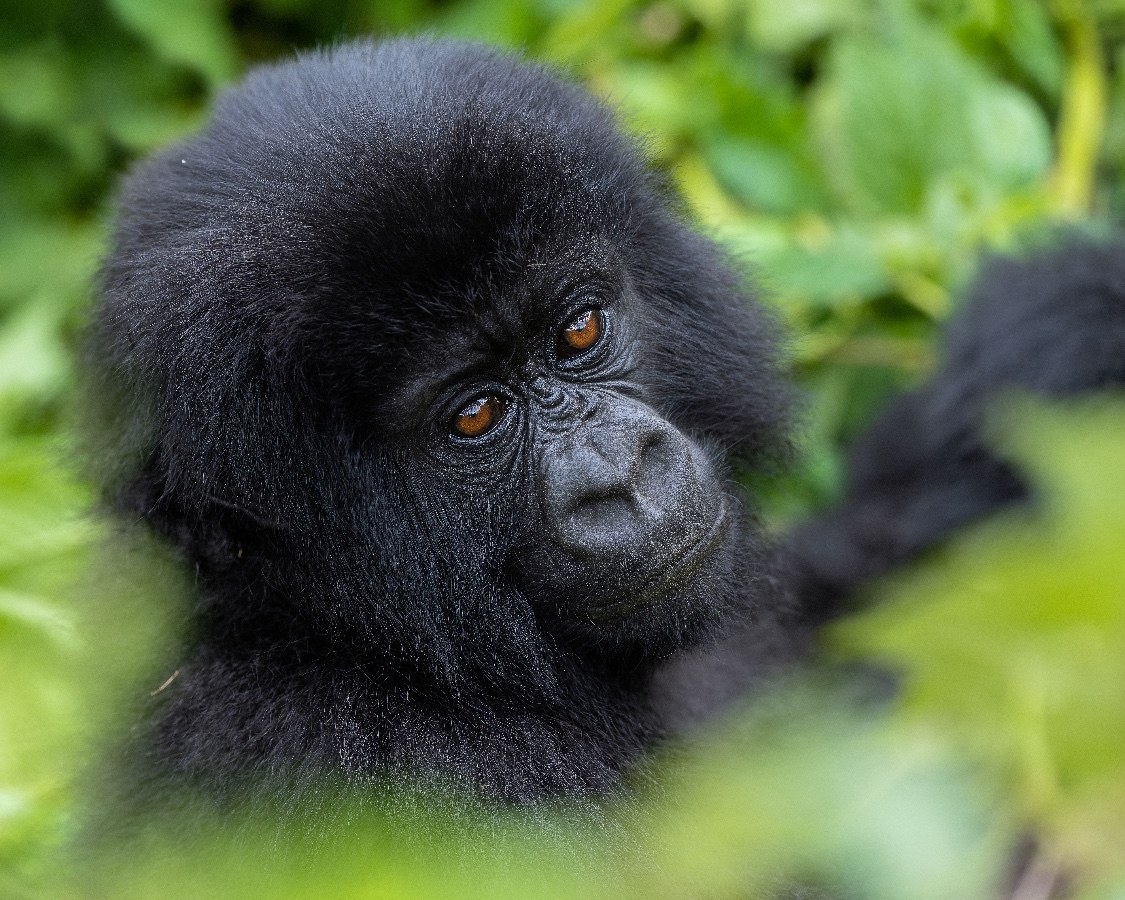
How far you walk depends on where the gorillas are. It can be an hour; it can be most of the morning. And then, suddenly, you're there: a silverback the size of a small car, mothers with infants, youngsters tumbling through the undergrowth. You have one hour with them. It goes impossibly fast.
Nobody comes back from that hour the same.
Evenings at the lodge
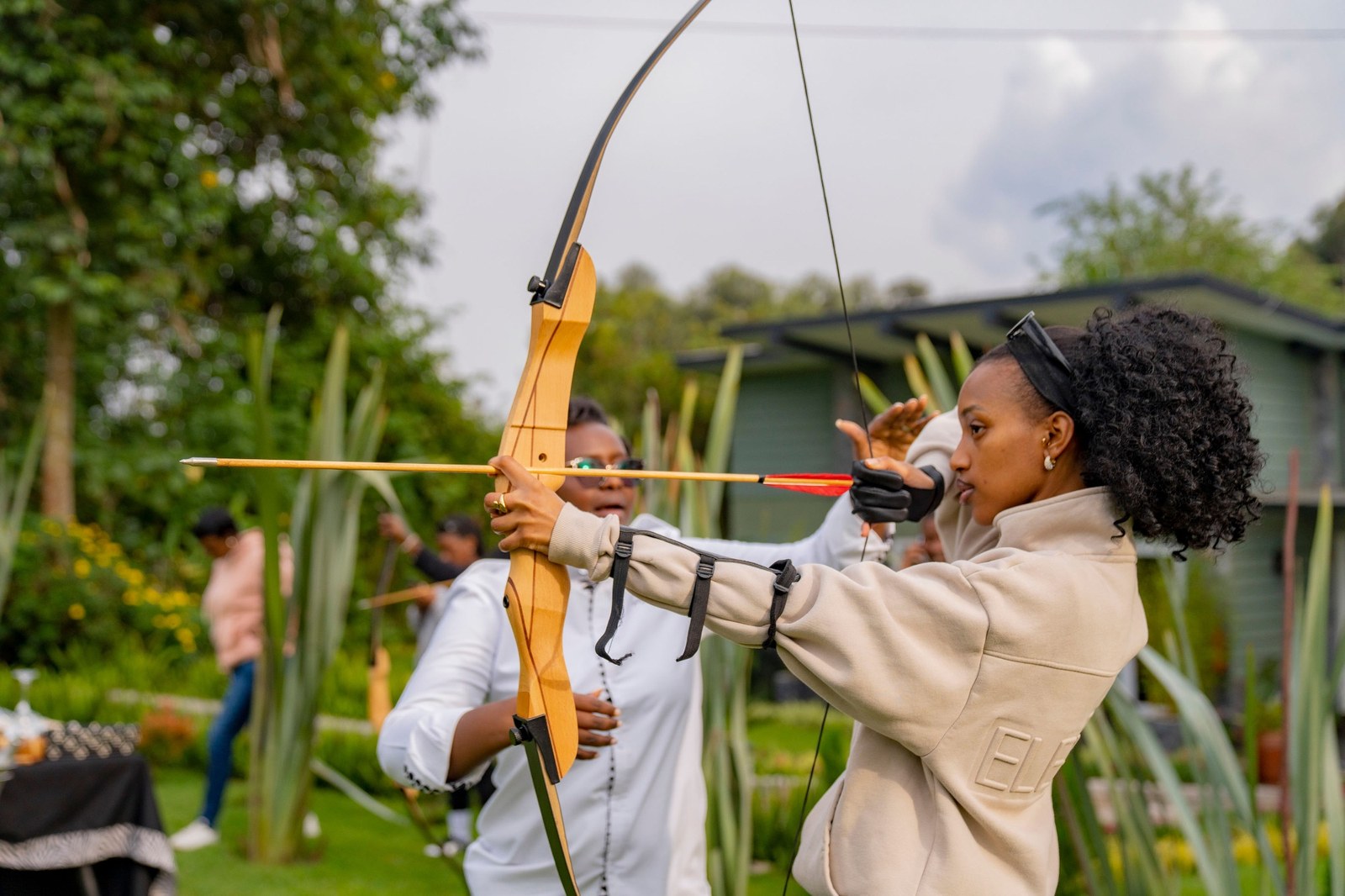
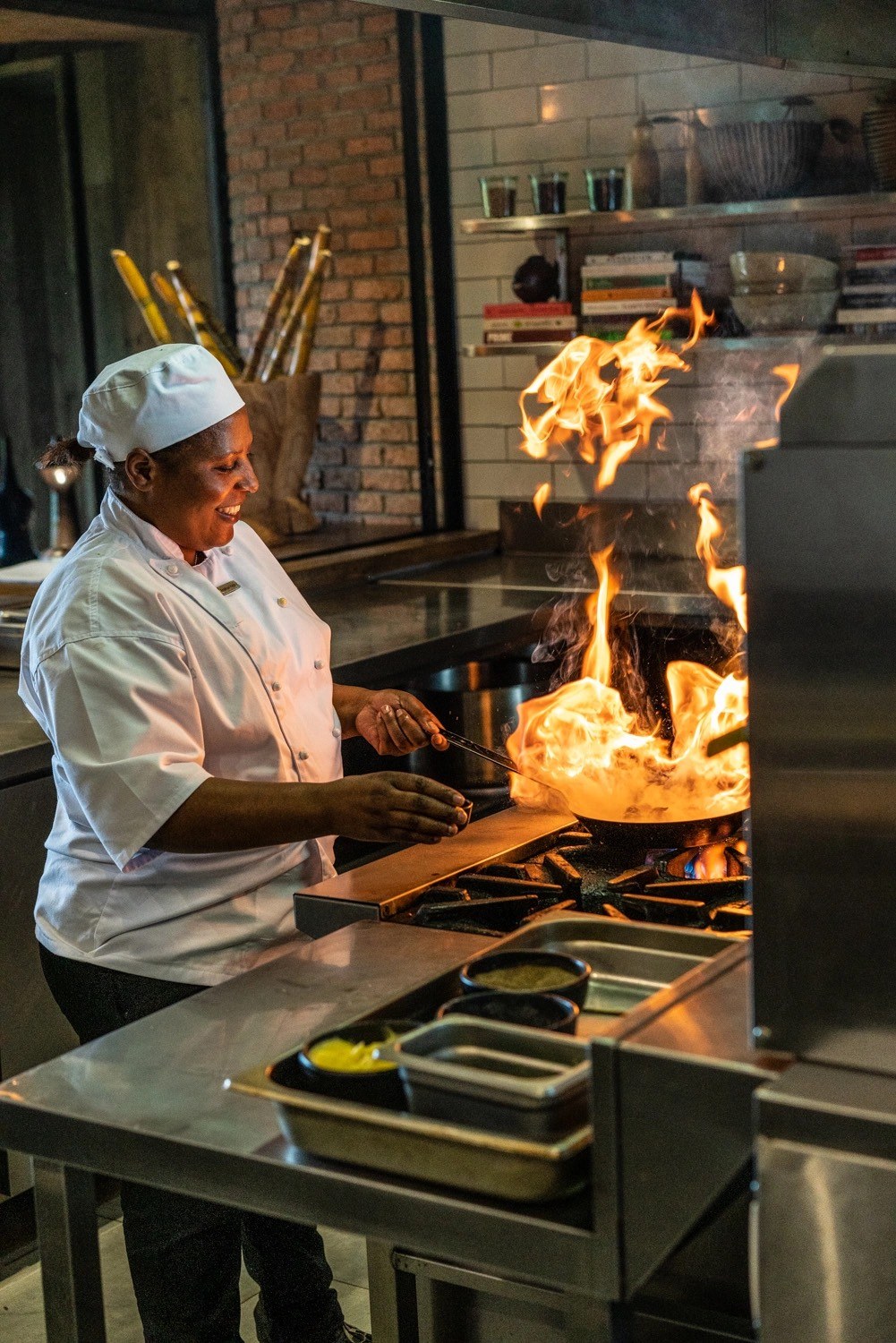
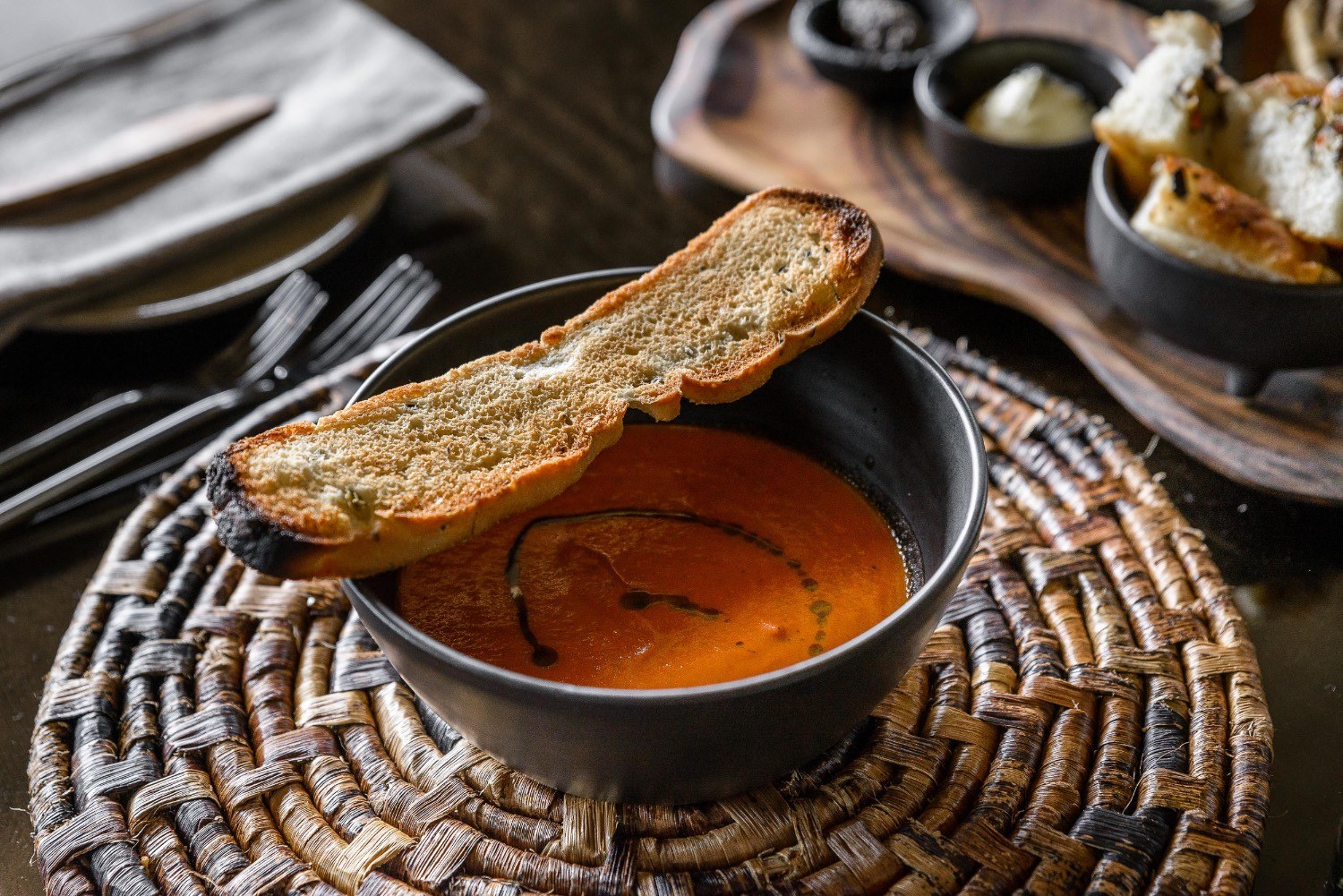
And there's more to these days than the trek. Evenings at the lodge are their own reward — a talk from the Gorilla Doctors who care for these families, quiet gardens under the volcanoes, and the odd unhurried afternoon of archery or a long dinner as the mist rolls in. The lodge itself is part of the adventure, with farm-to-table cooking from the hills around you.
If you're unwell, sit it out
Mountain gorillas share almost all of our DNA — and our illnesses. A human cold or flu can be deadly to them. If you fall ill before a trek, the guides may ask you to stay behind, and it's the right call: it's part of what keeps these families safe.
Brochettes
Rwanda’s favourite grill: small skewers, usually goat or fish from Lake Kivu, cooked over coals and served with hot pepper. Order them at a bar or café and eat them sitting down.
Ugali (ubugali)
A dense maize-flour porridge shaped into balls and used instead of bread to scoop up sauces.
Rwanda,
without your pet.
We love travelling with animals, but this is one journey we'd ask you to plan without yours. Pets aren't allowed into Rwanda's national parks — so no gorillas, no chimpanzees, no forest trails together.
The harder part is the way home. Rwanda counts as a high-risk rabies country, so to come back into the EU or the UK your pet needs a rabies antibody (titre) test done before you leave: the blood sample no sooner than 30 days after vaccination, then three full months before re-entry. Miss it, and your companion faces months of waiting or quarantine before coming home. The US has its own strict rules for dogs from high-risk countries.
Postcards, sent home.
Rwanda keeps one last surprise in the east.
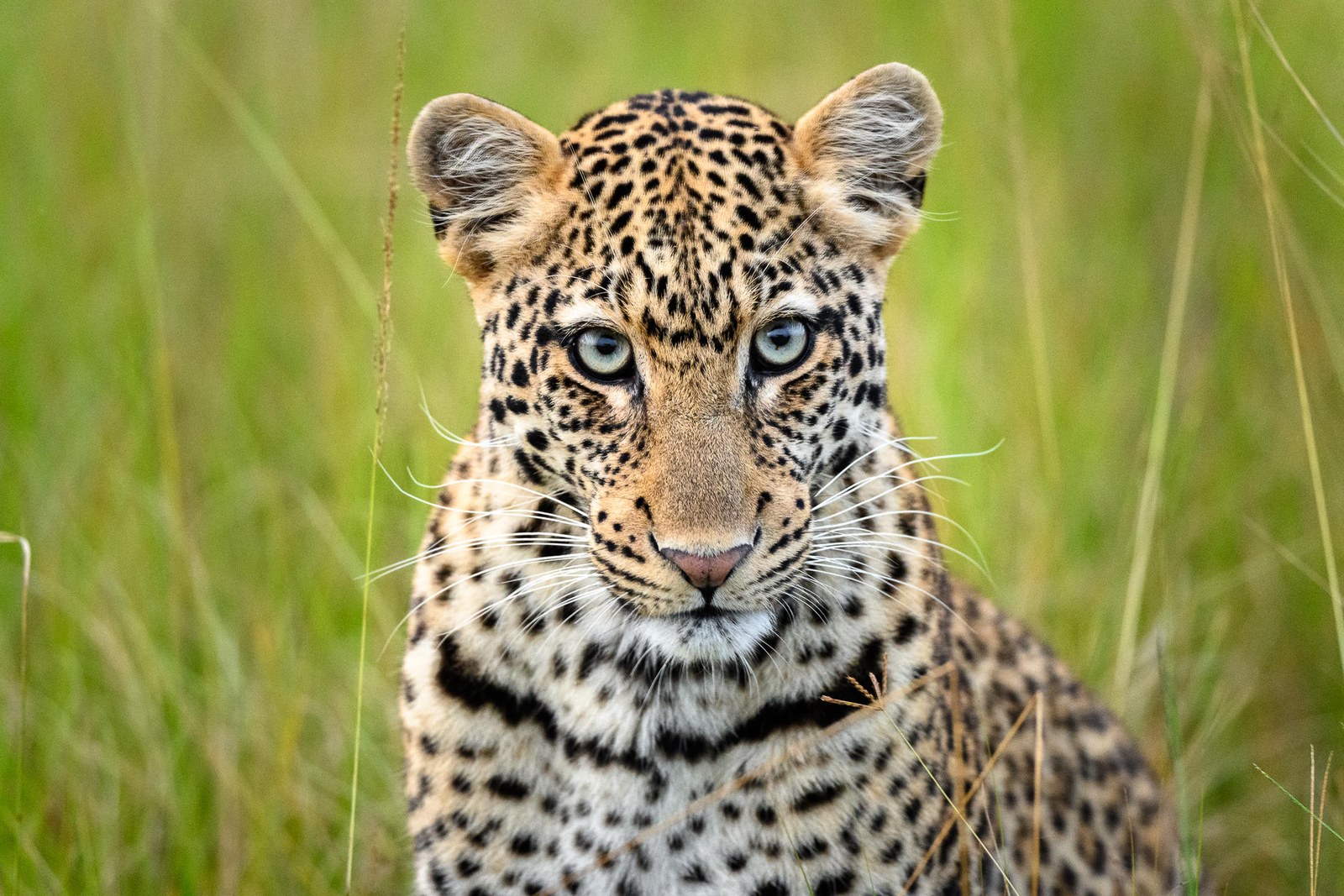
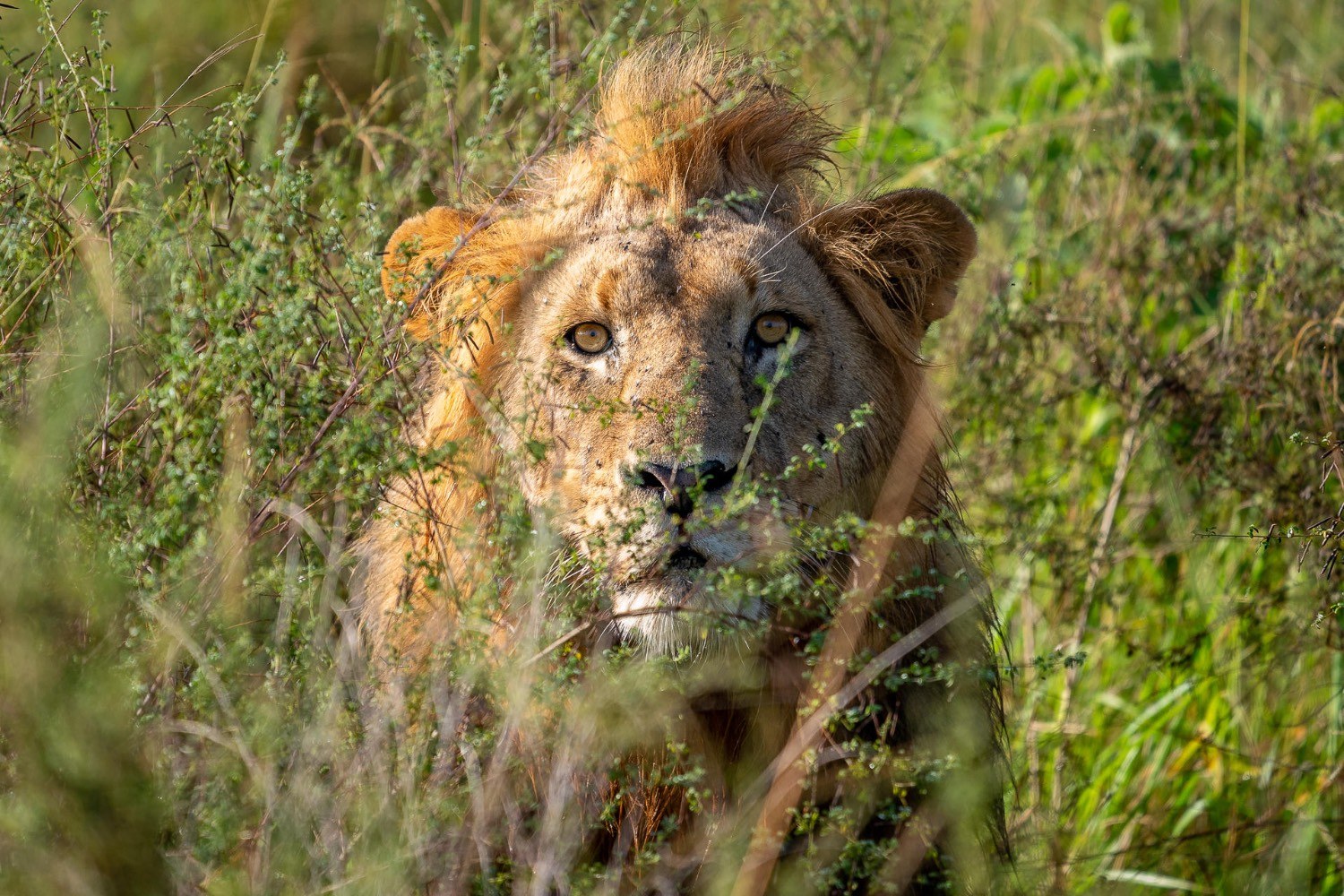
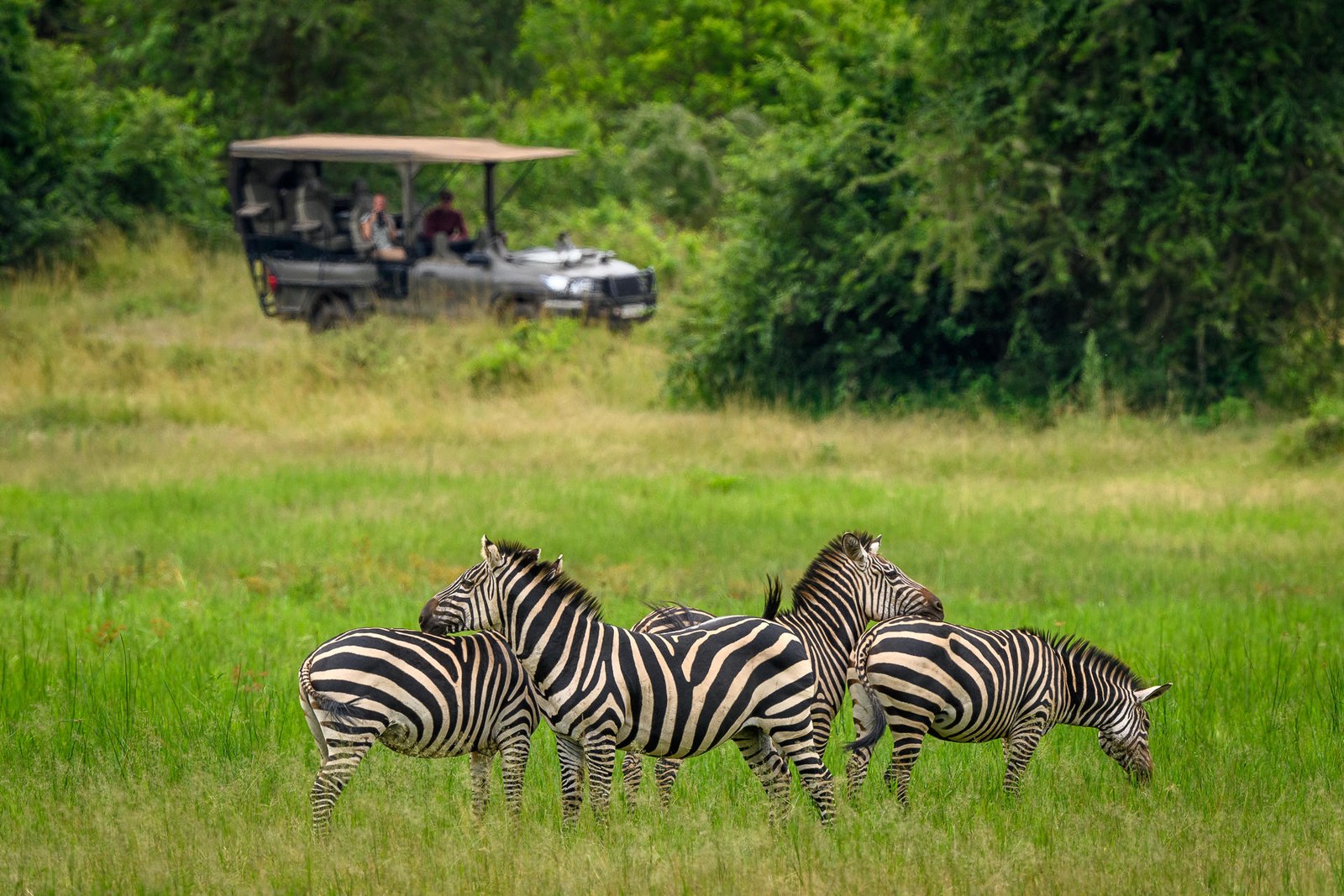
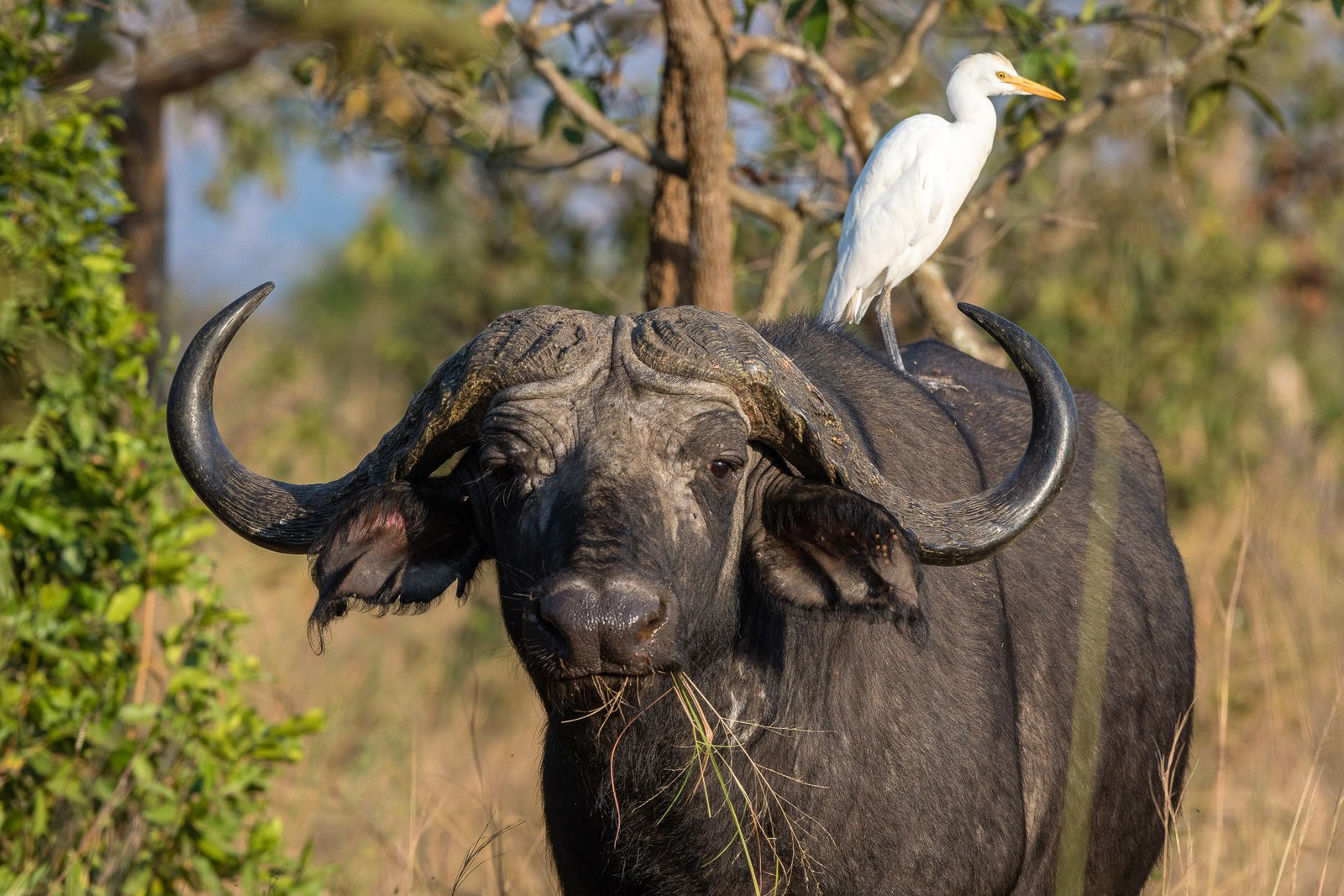
Akagera is the other Africa — golden plains, papyrus swamps and a chain of lakes, a world away from the misty forests of the west. Not long ago it was all but lost. Today it's one of conservation's great comeback stories: lions and black rhino brought back, the full Big Five roaming again, and the savanna alive once more.
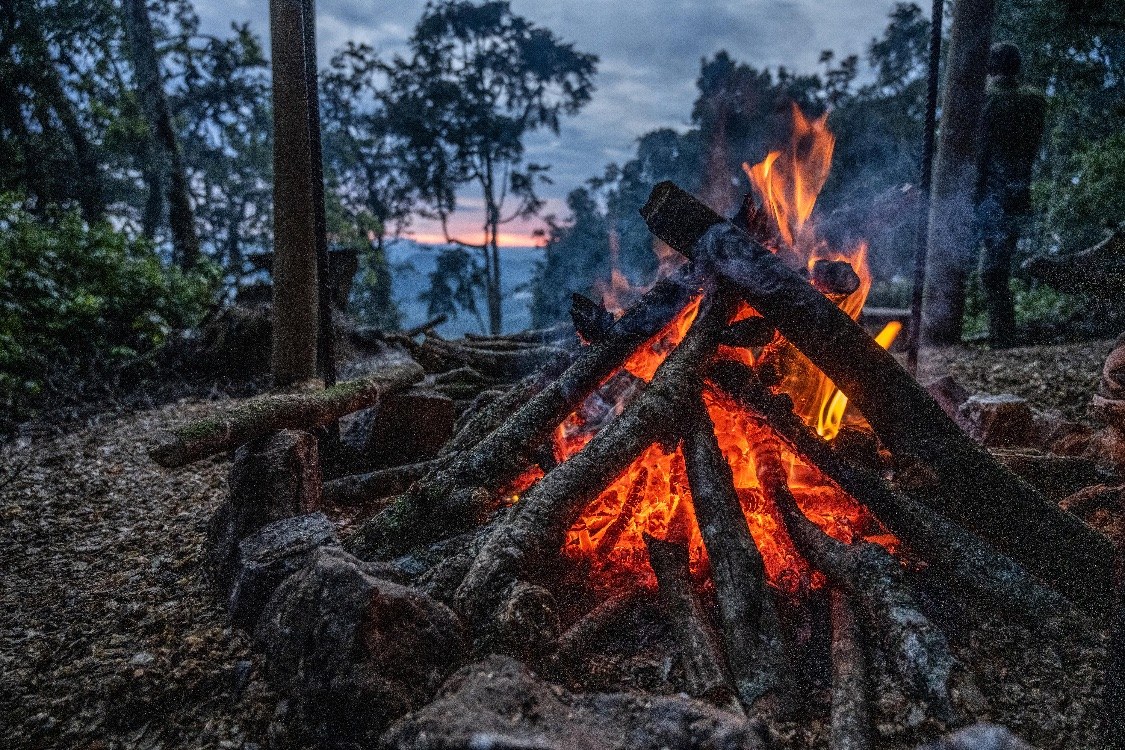
Here the days change shape. Game drives at first light; a boat on Lake Ihema, drifting past hippos and elephants that come down to drink; evenings around a fire under an enormous sky.
Add three or four days and your gorilla trek becomes a true grand expedition — volcanoes, ancient rainforest and open savanna. The best of two Africas, in a single trip.
You're in
good hands.
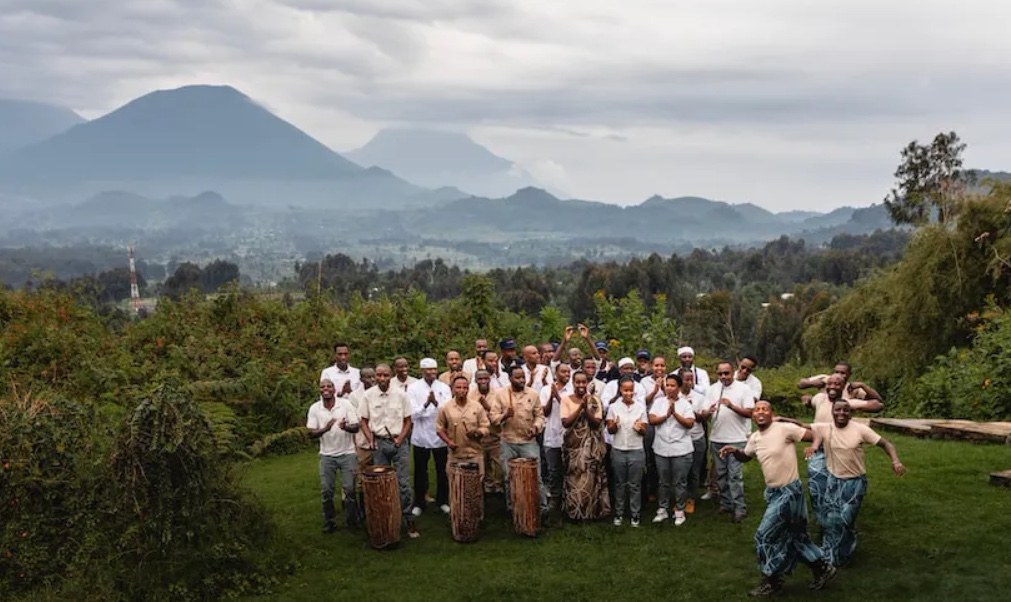
A trip like this lives or dies on the details: gorilla and chimpanzee permits, timed and strictly limited, booked months ahead; the right lodges in the right places; private transfers through the hills; a rhythm that leaves you rested for the moments that matter. On the ground, our trusted local partners look after all of it.
From the first airport welcome to the last transfer, everything in between is arranged — permits, lodges, the drives through the hills.
Real people, looking after you, every step of the way.
Describe your
dream getaway.
Tell us where, when and who's coming (paws included) — real people reply, usually within a day.
Where to next?
The Real Thing
America through a traveler's eyes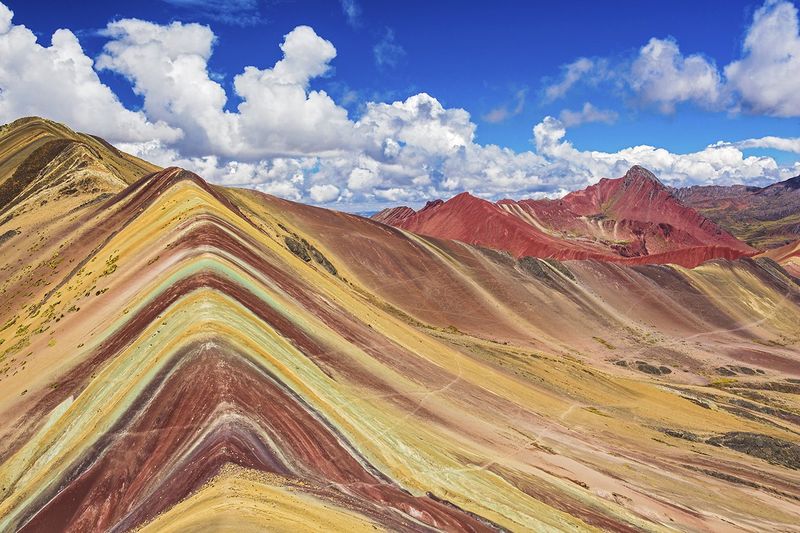
The World Before Us
Ancient landscapes, still unclaimed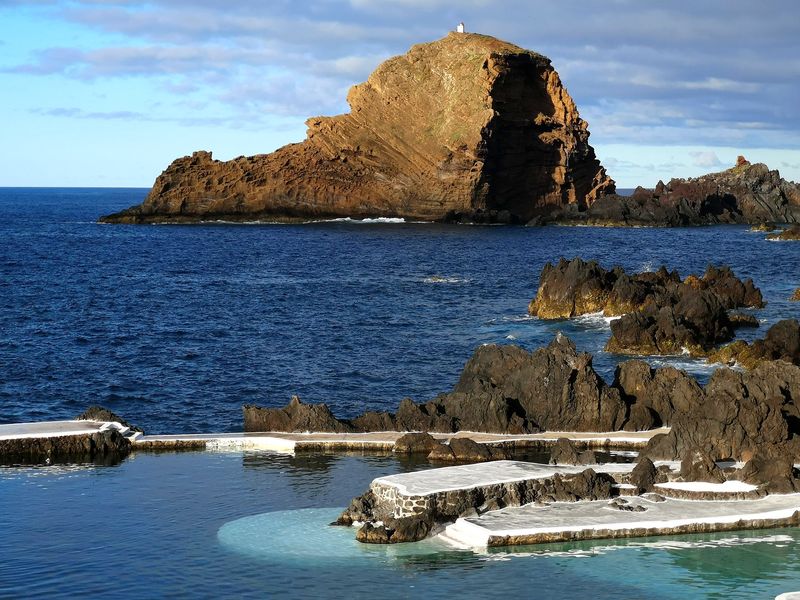
The Edge of Europe
Madeira & Iceland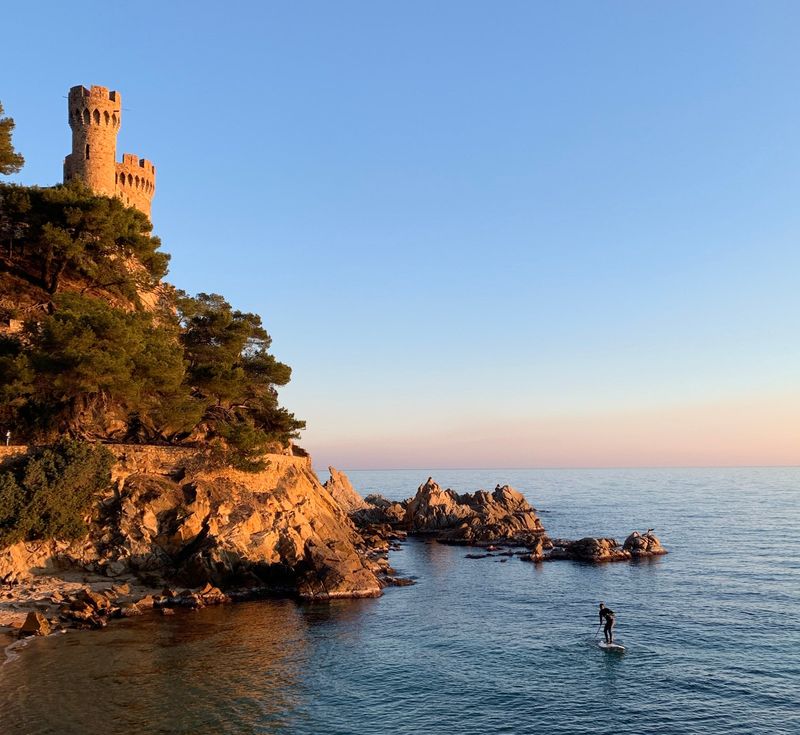
History Meets the Horizon
Dalí, medieval towns and hidden coves